Seadrift – the prologue


Prologue

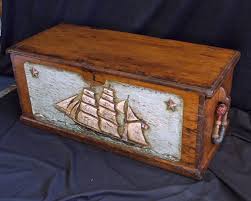
 Waves explode furiously against the shore, clawing at the sand, as they are dragged back into seachestthe roiling sea.

Shells, sea creatures and refuse swept up from the ocean floor dash helplessly against rocky outcroppings, before being sucked back into the maelstrom.

Lightning sparks the crests of the waves, as the tempest moves on, reluctantly releasing its hold, and the frenzied surf’s passion wanes.

Ripples slide back down the beach, lacking the strength to carry their burden of flotsam with them.

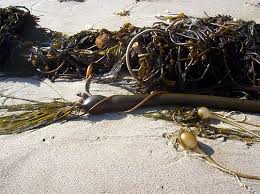
Moonlight reveals kelp, broken planks and detritus littering the shore anseaweedd befouling the tide pools.

A tangle of seaweed and debris bobs gently in the foam.

Small ivory fingers curl up from the tangle, as though still seeking the comforting clasp of a guiding hand.

A Taste of Hollow

Snippets from the award-winning first book of the Bunny Elder series, Hollow:

Prologue

A faded black ‘56 Dodge pickup rattles over the empty lanes, carrying its two passengers slowly through the sleeping village.

Hunched over the out-sized steering wheel, the driver peers carefully from side to side, occasionally shaking his head ruefully and muttering, as though searching vainly for something.

Across the cracked brown upholstery his companion seems unmoved by these signs of distress.

Leaning awkwardly against the rusty passenger door, eyes staring fixedly ahead, he gives no response to his chauffeur’s increasing frustration.

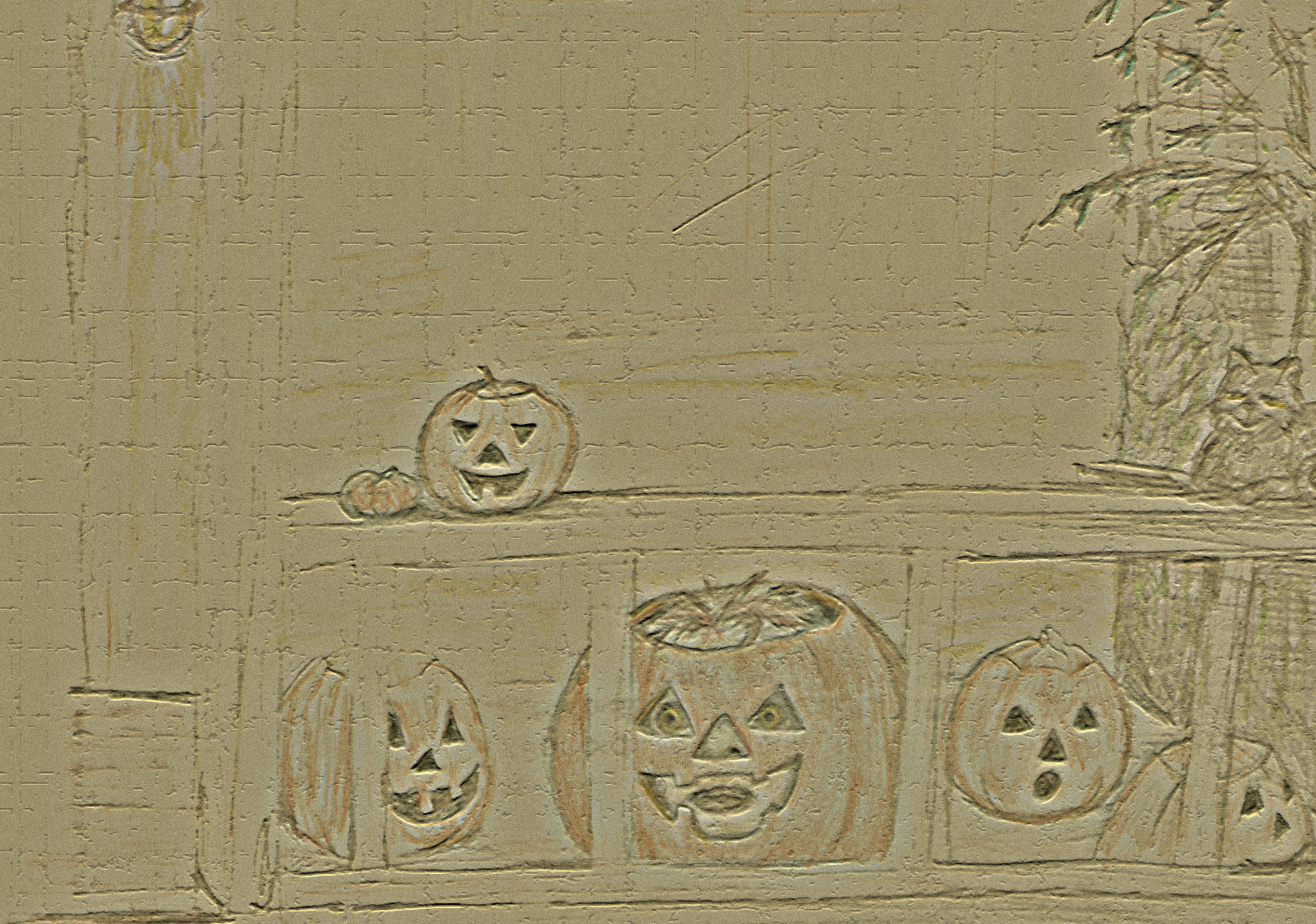
Proposed, but not included, draft illustration from Chapter Eleven.


Martha stepped into the house, turned on the porch light, and returned to get a better look at the carved pumpkin. With a small gasp she jerked back, her foot slipped in something slick on the porch floor, she tumbled into the railing and came to rest beside the over-sized pumpkin with its double grimace.
Martha stepped into the house, turned on the porch light, and returned to get a better look at the carved pumpkin.
With a small gasp she jerked back, her foot slipped in something slick on the porch floor, she tumbled into the railing and came to rest beside the over-sized pumpkin with its double grimace.


Reader Feedback is Priceless

I am about a third of the way through my current work in progress, The First Ladies’ Club.

At this stage of a novel, I sometimes hit a dry patch where I wonder how to proceed, or if I should even bother writing another word.

I felt myself slipping down into just such a slump this week, but then one of my local readers dropped by my office to let me know she’d just finished “…and Something Blue,” and was eager for my next book.

I thanked her for the kind words and assured her I was hard at work on the next. It was a simple exchange, but her words sparked the fires of my imagination and rekindled my enthusiasm for my work in progress.

Whether you are a writer or a reader, never underestimate the power of reader feedback.

To encourage feedback, writers need to be accessible to their readers.

I make my Facebook page [https://www.facebook.com/jbhawker2012] open to public comment, my author email address [j.b.hawker2012@gmail.com] is posted on my site and my Amazon author page [http://www.amazon.com/-/e/B009I3H95Y] is part of my email signature. This blog links to my author page and posts on my Twitter account [@HawkerJB].

I’m trying to make it easy for my readers to contact me.

Of course, I frequently check out the reviews of my books for sale on Amazon. The reader who takes the time to post a review deserves to have those comments considered, be they encouragement or helpful criticism.

As a reader too, now I understand how important it is to the author, I try to offer encouraging reviews of the books I read.  My words just may be helping a fellow author out of a slump.

Words are powerful; words of encouragement are priceless.
 

Pulling back the curtain

Like many new independent authors, I was naive about the publishing and marketing world. I believed when an author wrote a book, if it was published and got good reviews, it meant success was right around the corner. (Great American novel…or at least great american cozy, here I come!)

After publishing four novels, all getting pretty decent reviews, and finally dipping my toe into promotion and marketing, my fantasy bubble has well and truly burst.

While there are a few lucky authors whose writing careers took off the way I’d ignorantly imagined, most of us must scramble frantically simply to get our books noticed and begin to build a reader base.

I was surprised when I learned of some of the ways being used to get reviews and push good ones to the top of the list. I had foolishly assumed after the first few reviews from the author’s friends and family, all the rest were authentically from readers who cared enough about a book to post a critique.

Imagine my dismay to read a nasty “revenge” review of a friend’s book, after she had given an honest, but unflattering review of another author’s work. Who does that?

Loss of innocence can be a painful experience, but usually one which leads to  greater wisdom and maturity.

I’m looking ahead with eyes more widely open than before, but with hopes and dreams intact, as I learn to swim in the turbulent waters of the independent author.

Patience and the editing process

Everything I read about self-editing, after the caveat, “Hire a pro,” says to set your work aside after the initial proofing and beta-reader corrections and come back to it with fresh eyes after at least a few weeks.

I’ve never been able to do that. I’m too eager to see my words published, so I edit, proof, submit to beta readers, edit, proof, edit, proof again and publish.

I’ve been pretty lucky, so far, not to have too many major clinkers slip through.

I’m currently in the process of reformatting my Bunny Elder series for a Kindle bundle. In the process I’m proofing the published versions of the four books, once again.

Now, I understand the wisdom of that waiting period advice.

How could I have missed so many typos? Aargh!

My readers and reviewers have been kind to overlook the misplaced periods and foot symbols substituted for apostrophes, but I would never have published my books if I’d noticed them.

When I complete the re-edit/re-format process for the bundle I will be uploading new interiors for the individual Kindle and print-on-demand editions of all the books, too.

With this lesson well-learned, you can be sure my current work-in-progress will undergo an aging or gestational period before I proof it for the final time, allowing the mists of ego to clear from my vision so I can honestly assess and correct the work before publishing.

Drowning in the Flood of Freebies?

When I first entered the world of the independent author in 2011, I read every bit of wisdom I could find about each step of the process, from the first germ of an idea, though outline and character development all the way to marketing techniques.

One bit of advice which appeared frequently was to provide free books to increase your visibility and develop a readership base.

I have followed this advice, holding periodic promotions of free or deeply discounted Kindle versions of my books. In the early years these give-aways usually resulted in an uptick in either sales or reviews of my work.

Independent publishing has become easier every year and websites dedicated to free and discounted digital books have blossomed. With this surge, we may be seeing a saturation effect.

Some readers rarely spend any money on their digital reading and I’ve noticed readers who get books for free can be more critical in their reviews than those who have an investment in enjoying a purchase.

I think we may be entering a time when the book give away has less impact on future sales and it will become necessary to find new, creative ways to get our books noticed by our target audience.

I believe the flood of e-books may begin to ebb as some authors become discouraged and readers become more discerning and once again shop for books based upon quality rather than price-point alone.

In the meantime, it is up to us to come up with those original and creative promotional ideas.

As authors, we create whole worlds inhabited by personalities of our own design, creative promotion can’t be beyond us, can it?


Feeding the Creative Muse is Job One

I’ve spent the last few weeks concentrating on marketing my published works and the summer bundle, “Under the Italian Sun.”

It has been exciting trying out new promotional processes and I’ve learned a lot.  Mostly I’ve learned to moderate my expectations.

Being pretty new at marketing my books, I’m afraid I expected huge results from these  increased efforts. When I failed to see the anticipated surge in sales and reviews, I began to feel anxiety and disappointment. I didn’t like these feelings,  so I took a deep breath and decided to get back to my work in progress, featuring a small town pastor’s wife on the Oregon Coast.

I introduced Naidenne and Pastor Scott in my book, Seadrift, and became so fond of them I decided to find out what has been happening to them since their marriage.

When I got back to the early chapters of the manuscript it was like a welcome visit with old pals. All my anxiety about sales dropped away as I became fired up to see what would happen next to these dear friends.

My creative juices, which had been growing stagnant during my promotional push, are once more springing alive. The muse is back.

I will need to revisit marketing and promotion again, of course, or I’ll be writing only for myself, but now I know where my priority lies.


The joys of networking

This summer I have enjoyed collaborating on a Kindle bundle promotion with four incredibly talented and generous authors. For the bundle, entitled “Under the Italian Sun,” we each contributed one cozy mystery novel set in Italy.

The five of us are scattered around the globe and vary in our nationalities, experience, backgrounds, ages and writing styles, yet we are bound together by our love of fiction writing and a desire to see each other succeed.

In working on the bundle promotion we are also promoting each other in our individual projects, because when one is successful it pulls up the rest of us.

The more experienced authors are eager to share their expertise with those of us new to publishing, while we each do what we can to boost awareness of our colleagues’ writing.

Along with the very practical education and the other joys of collaboration I’m experiencing, I have discovered a feeling of responsibility for the other independent authors I am meeting through this project. I want to read and review their works and encourage them in any way I can.

I think I am becoming a real part of the independent author community and I feel very lucky to have been welcomed in.